
Summer of 2004. Dhoom had just come out and people were talking about nothing else.
Until then, motorcycles in Indian cinema were mostly props. The hero rode one slowly while the camera admired him from three different angles. Dhoom changed that. Suddenly the motorcycle wasn’t just transport, it was the character. And then there was John Abraham on a red and black Suzuki GSX1300R Hayabusa, grey-market nitrous boosters and all, doing things on screen that made no physical sense and no one watching in that cinema hall cared. I walked out of New Vasant Talkies in Bhilai with goosebumps.
That was probably the first time I dreamed of owning a sportsbike — someday, after becoming an engineer.
I climbed onto my Bajaj Caliber 115, affectionately known as the Hoodibaba after its unhinged television campaign during the 2003 Cricket World Cup, and rode home as if I were piloting the Hayabusa itself down Central Avenue. The Hayabusa was probably doing 300 km/h on screen. The Caliber was doing considerably less. In my head, there was no difference.
Over the next four years of riding it to college I did everything to that poor motorcycle. Glowing lights around the rear wheel that lit up every time I braked, looked spectacular, murdered the battery. Low-riser cafe racer handlebars so impractical that most of my friends refused to ride the bike, I thought they looked cool, everyone else thought they looked ridiculous, they were right. Modified graphics, guardrails, whatever I could get my hands on. Parts weren’t exactly available on every corner in Bhilai so creativity had to compensate for money. There were crashes too. Some were my fault. Most, I maintain, were not.
Through all of it I never thought about the cost. My parents were paying for the bike, the fuel, the repairs, and quietly wondering what their son was doing to a perfectly good motorcycle. When you’re young and someone else is paying the bills, cost of ownership is an abstract concept. The bike breaks, you fix it, you keep riding.
Now I maintain two big motorcycles and every service bill feels personal. Every tyre replacement hurts. Every time the service advisor says “Sir, this also needs to be changed,” I suddenly remember how much I used to enjoy having no idea what anything cost.
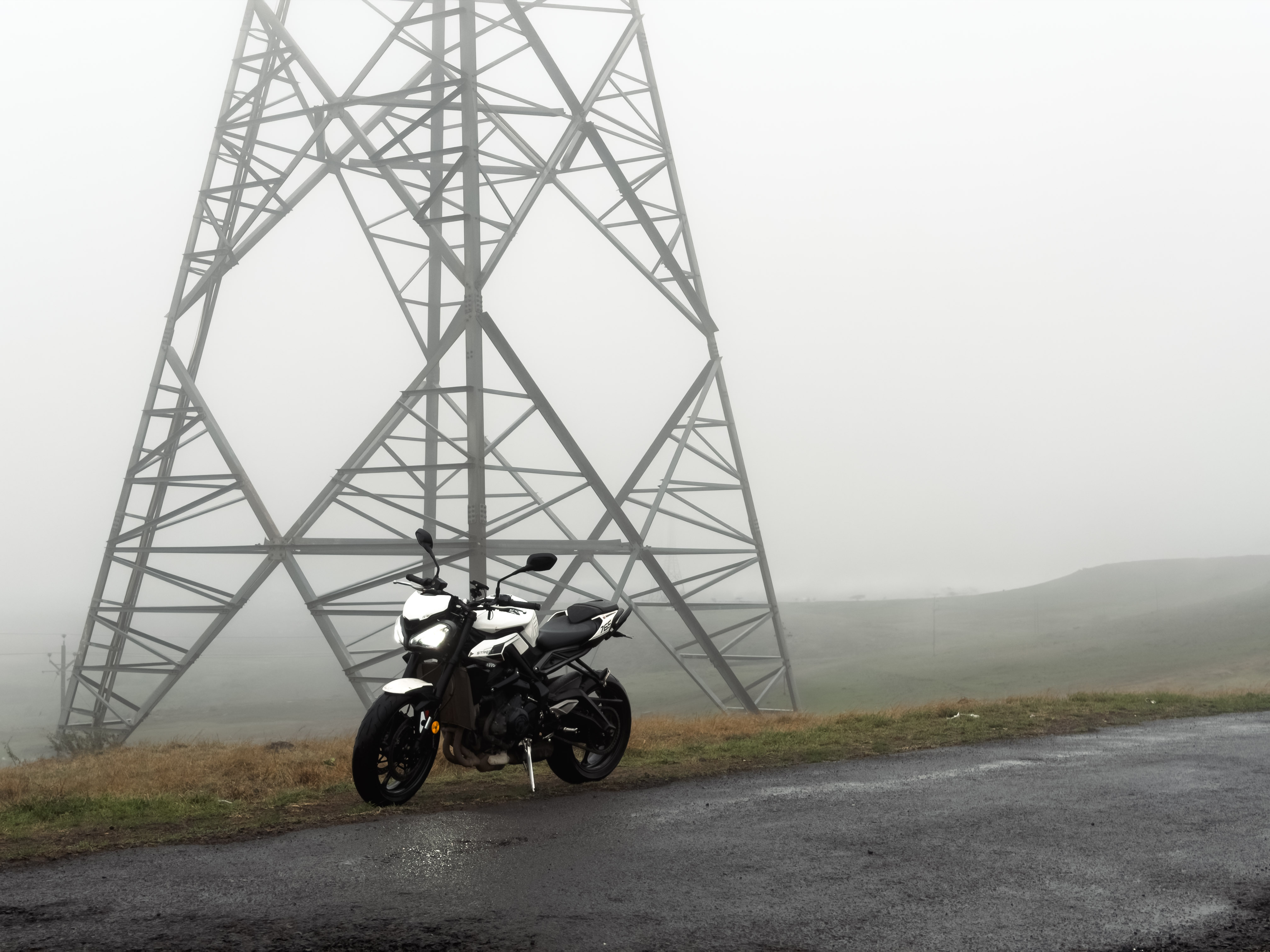
The Interceptor is manageable, a service runs around seven to eight thousand a year, insurance another five, and honestly it doesn’t bother me much. The Triumph is a different matter entirely. Insurance alone runs around 14,000 a year, plus 3,000 for RSA. I service it every 8,000 to 9,000 kilometres which comes to around 17,000 to 18,000 rupees a time. The rear tyre I changed at 14,000 kilometres, a Michelin Road 6 at 26,500 rupees. The front I changed at 20,000 kilometres, a Metzeler Sportec M9 RR at 19,500 rupees. Brake pads on the front went once so far, 14,500 rupees, and the rear I haven’t touched yet. In September there’s a major valve adjustment service due, approximately 35,000 rupees. Add another 20,000 or so a year for miscellaneous work that always seems to find its way in. And none of this includes fuel, which disappears the moment you open the throttle.
I am still completely fine with all of it. No matter how bad the week has been, the moment I fire that engine on a Saturday morning and open the throttle, the symphony of the triple melts the frustration away as the mile markers start disappearing fast as falling dominos. The money disappears and the machine and the memories remain. That’s the deal I’ve made with myself.
That feeling doesn’t appear on any cost-of-ownership spreadsheet. But I’ve realised that most of the significant decisions I’ve made about machines have never been rational anyway. I’m impulsive, I’ve made plenty of decisions quickly when waiting would have resulted in a better deal, or sometimes no purchase at all. But once something becomes mine, I take care of it. That’s the one thing I can say in my defence.
I owned a Fiat Punto Evo for ten years, from September 2014. For much of that time it seemed determined to develop a new problem every few months. My parents and brother were never particularly happy with it and eventually exchanged it for a Maruti Suzuki Baleno in 2024. Rationally we should have sold it years earlier. I kept it running for a decade because once I own something I become attached to keeping it alive, even when the sensible thing is obvious.
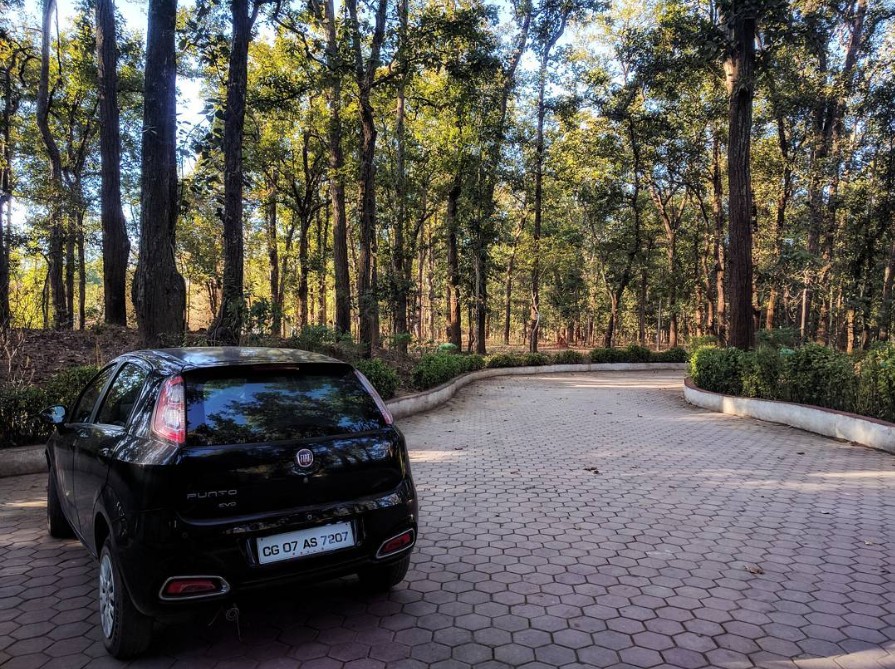
The cars and motorcycles have almost never been rational decisions. The Punto instead of a Maruti because my mother felt more comfortable in the backseat, that was enough reason. The Interceptor still in the garage because my brother and I had wanted that motorcycle since it launched, and when we could finally afford one we bought it, and despite the after sales service and mediocre performance and everything else I still can’t quite let it go. Because some things aren’t purchased with logic.
The Street Triple makes even less sense. On Indian roads where a pothole can turn a Sunday ride into an expensive afternoon, yet every time I come back from a ride on it I’m grinning like an idiot — and that’s when I realise I probably am an imposter among career-driven people, and I’ve made my peace with it.

I’ve sometimes wondered whether I suffer from a strange form of imposter syndrome. I know I’m good at my job, I’ve built a decent career and I’m proud of the work I’ve done. But I don’t have that relentless ambition I see in some people around me, the drive for the corner office, the next promotion, the bigger title, the bigger salary, the bigger house. They have dreams they are chasing with everything they have. I’m not sure I have one in that sense. If I’m completely honest with myself, I mostly want to work, earn enough to live comfortably, maintain the motorcycles and eventually buy another one. Maybe that sounds unambitious. Maybe it is. But I’ve started thinking that ambition doesn’t have to look the same for everyone. Perhaps my idea of success is simply different.
The eighteen-year-old who raced a Caliber 115 down Central Avenue after watching Dhoom, dreaming of a Hayabusa, and the man riding Snowpiercer down that same stretch twenty years later. It was only a few days later, sitting with old friends reminiscing about school and college, that I realised how far I had actually come. That’s what success looks like for me.
For someone often described as detached and aloof, I do have a softer side. You just need to put two wheels and an engine in front of me to find it.