I’ve never been a food snob. I just love good food. My earliest food memories are from other people’s kitchens. My first mutton was at a family friend’s house party, and my first small fish was at a neighbour’s. That second one came with a side of jaundice, and for the next thirteen years non-vegetarian food largely disappeared from my life, apart from the occasional egg.
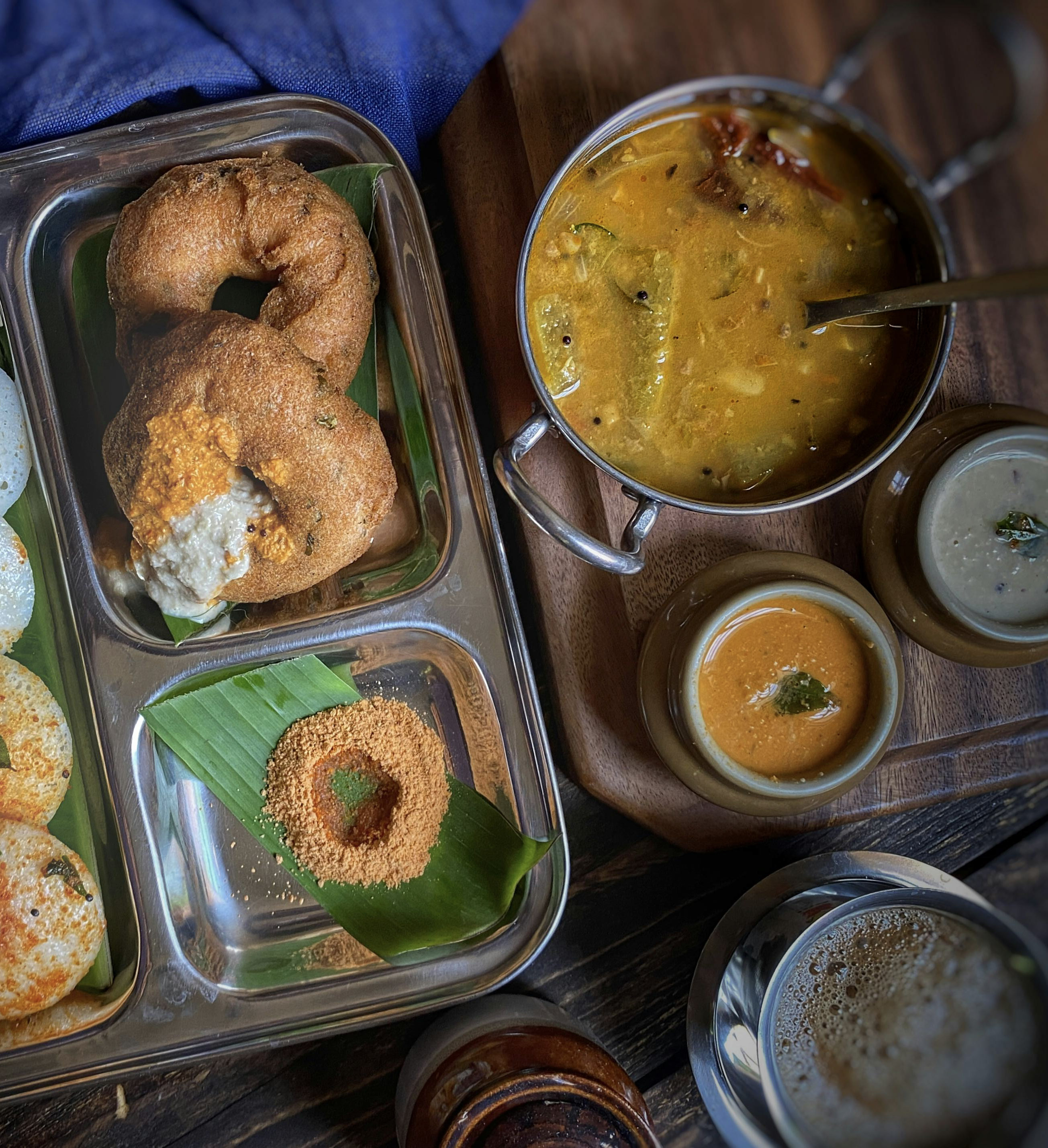
Growing up, I was never a fan of rice, and I’m still not. The one exception, right from the start, has been sambar rice, and in particular my grandmother’s. Her sambar had everything in it: bottle gourd, brinjal, radish, tomato, pumpkin, small round onions and drumsticks. And it was thick, the way sambar is supposed to be.
She didn’t cook every day, only when she felt like it or when I asked her, but whatever she cooked, she was the best at it. The two things I miss most are her sambar and her triangular parathas. I grew up eating those parathas for breakfast with an omelette or egg masala, so it’s no wonder I was fat, and I still am. Good food does have its disadvantages, and I’ve mostly chosen to ignore them. She wasn’t much better. She had diabetes and a sweet tooth at the same time, and some days, when my mother wouldn’t give my brother and me money for ice cream, my grandmother came to the rescue. She’d hand me ₹50 and say, “Go and bring ice cream. I also want to eat some today.”
The secret to her sambar was in the masala. Every summer, my mother and grandmother would set aside their differences and spend a few days grinding spices together. I can still smell it. The masala was so pungent while it was being ground, with garlic, lots and lots of garlic, kilos of onions, oil, dried red chillies, green chillies, salt, pepper, tej patta and more or less every other Indian spice, each in its own proportion. They’d shape the mixture into round balls and lay them out in the backyard to dry for days. My grandmother called them laddus. On the first day they were yellowish, and by the time they’d had enough sun to be used, they’d turned almost dark brown.
My job was to guard them, keeping the monkeys away and rushing them inside if it looked like rain. I took the responsibility seriously without understanding it at all. Why go through all this when you could just buy powder from the store?
Plenty of people in Bhilai understood it better than I did. The laddus were so popular that neighbours and South Indian friends who didn’t have the time or the skill to make their own would ask my father, my grandmother or my mother for at least one. They’d ration it and use it only when they were cooking for a special occasion.
I only figured it out after my grandmother passed away and my mother stopped making them. Those laddus were the sambar. They gave it a smell and a depth that I’ve never found anywhere else. Without them it was still technically sambar, but it wasn’t hers.
As I got older and started eating out, I realised sambar is everywhere in India, in every restaurant and on every corner, north and south. I tasted most of it and didn’t like any of it. Restaurant sambar is usually watery, which I hate, and even when it isn’t, the taste is wrong. I’d sit with friends happily dipping their idlis into bowls of the stuff while I quietly wondered how they could enjoy it.
They were probably right, and the sambar was fine. The problem was that I’d been eating the gold standard since childhood, and every bowl that followed was going to lose the comparison.
The closest I’ve come is in Coimbatore. I travel there for work, and the hotel I stay at, The Residency Towers, makes an absolutely lip-smacking sambar, which I have at dinner. Of everything I’ve eaten since my grandmother’s, it’s the nearest to what I grew up on. Maybe the chef learned it from their grandmother too.