I’m wondering how this book escaped me for so long.
Hyperion by Dan Simmons is the kind of novel that makes you question what science fiction is actually capable of. It isn’t just a story set in space. It’s a space opera of genuine magnitude, vast worlds, centuries of human history compressed and expanded across star systems, mystery, religion, poetry, and one of the most genuinely terrifying creatures ever written into the genre.
The structure is borrowed from Chaucer. Seven pilgrims travel to the Time Tombs of Hyperion, drawn by reasons none of them fully understand, and each tells their story along the way. Six tales, six completely different lives, six completely different registers. The priest who makes contact with a remote tribe on an alien world. The poet Silenus, whose life spans centuries, still chasing a masterwork he may never finish. A soldier, a scholar, a detective, a diplomat’s child. Each story feels like it could be its own novel.
What Simmons does with that structure is extraordinary. The Canterbury Tales format isn’t just a storytelling device, it’s the only way to show the sheer complexity of the world he’s built. Each perspective reveals another layer of the Hegemony, the Ousters, the TechnoCore, the Web. By the time you’ve heard all six stories you understand the world not through exposition but through lives lived inside it.
My favourite is the priest’s tale, the first one, and the poet’s. Both for different reasons. The priest’s story has a quiet horror to it that the rest of the book doesn’t, an encounter with something genuinely unknowable among the Bikura, a tribe of seventy who call themselves the Three Score and Ten, survivors of a seedship crash on Hyperion who should not have lived and who, it becomes clear, are not quite living in any normal sense. The poet’s story works differently, spanning such an enormous stretch of time that it reframes everything else. Silenus watching centuries pass while he waits for inspiration is one of the strangest and most affecting portraits of an artist I’ve read in any genre.
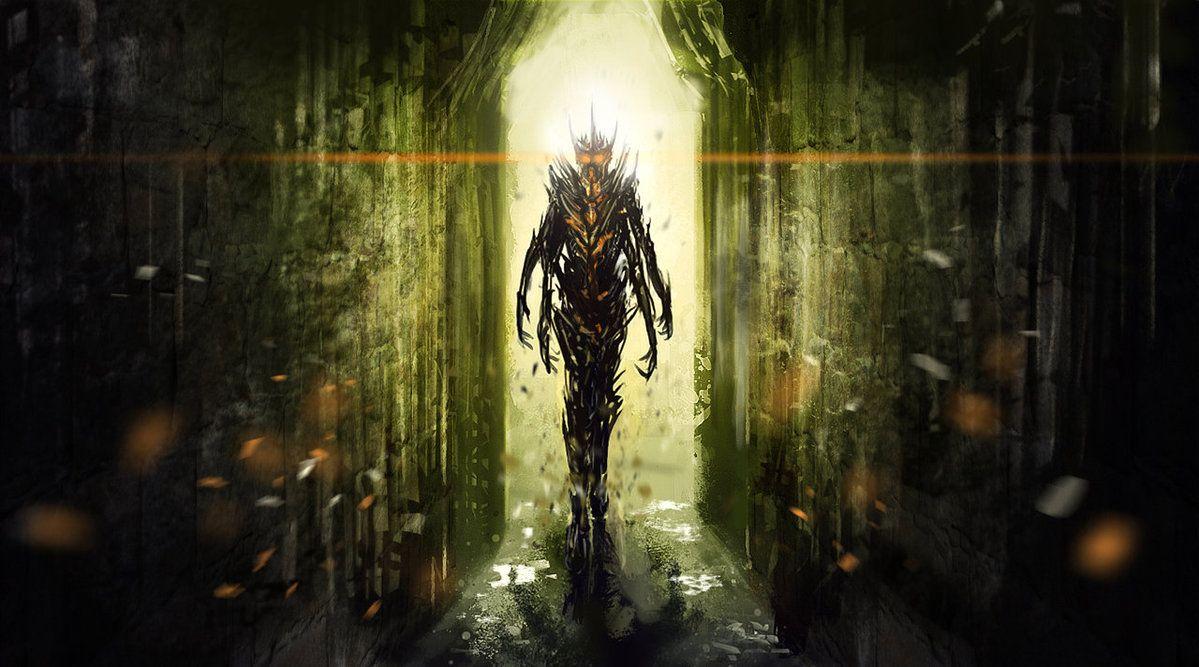
No one in the book can tell you what the Shrike is, where it came from, what it wants, or what it’s capable of. Simmons builds its presence slowly, through fragments across all six stories, each one adding another detail without resolving anything. By the time you finish the book you know more about the Shrike than when you started, and you understand it less.
“History viewed from the inside is always a dark, digestive mess, far different from the easily recognizable cow viewed from afar by historians.”
The book ends without resolution. Deliberately. Everything is in motion when it stops and nothing is answered. The second part, The Fall of Hyperion, continues directly, but it wasn’t available on Amazon India so I had to order it through Atlantic Books at around 1,250 rupees to get the same SF Masterworks edition. It was worth every rupee.
I read Hyperion and The Fall of Hyperion earlier this year, in April and May. For context, my favourite science fiction novels include The Stars My Destination, The Dispossessed, The Left Hand of Darkness, and Rendezvous with Rama. This one belongs in that company. Top ten, all time.
There are two more books in the series, Endymion and The Rise of Endymion. From what I’ve read on book subreddits, the general consensus is that they don’t match the quality of the first two. Hyperion and The Fall of Hyperion end with enough closure to live with, so stopping there is a legitimate choice. Maybe someday I’ll read the other two and update this.
The world Dan Simmons creates across these two books has everything the genre should have, mystery, scientific progress, space travel, time, religion, philosophy, and genuine awe at the scale of what’s possible. If you’re going to read one space opera in your life, read this one.
“You have to live to really know things, my love.”
I’ve been thinking about that one since I closed the book.