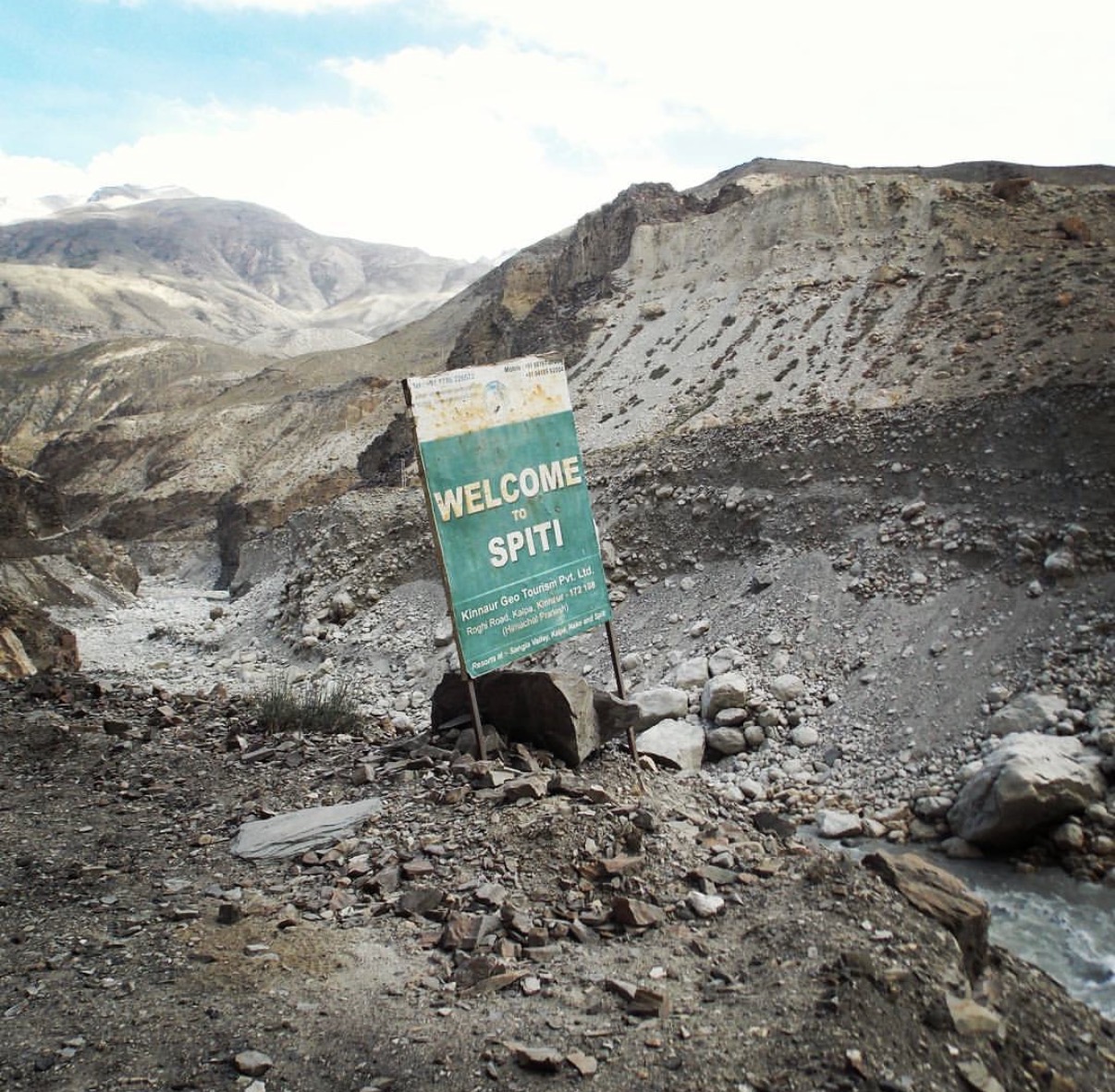
We had ridden into Kaza in complete darkness and seen nothing of it. The next morning I stepped outside and stopped.
The sky was the bluest I had ever seen, and right next to where we were staying was a mountain so close it felt like it had no business being there. Everything was huge, dry and silent, nothing like the green river valleys we had ridden through in Kinnaur. That stretch had been lush, almost gentle. Kaza was vast and arid, the kind of landscape that makes you feel appropriately small. We had finally arrived.
The first thing I did was ask the hotel manager if I could use his landline. My Airtel SIM had no network in Kaza. My parents had no idea where I was or whether I was alive, and after the previous night’s ride I felt they deserved to know at least one of those things.
That first day we did nothing that required planning. We walked around the market, visited the monastery in town, ate local food, and sat with other travellers gathering information on where to go next. Back in 2015, Spiti hadn’t yet become the social media destination it is now. The tourism boom hadn’t reached every corner. People in Kaza were curious to see riders from Chhattisgarh, a state that required explaining.
“Raipur? Where is that exactly?”
And then would follow the geography lesson. Which part of India, which region, what it’s known for, how far we had come. That happened everywhere we went. At first it amused us — we small-towners know our geography, why doesn’t everyone else? After a while we accepted it and just enjoyed the exchange. It was one of the better parts of the trip, the actual conversation that happens between strangers when neither of them can look anything up. You share your world, they share theirs, and somewhere in that you find out more about both than any travel guide would tell you. That version of travel is harder to find now. Everyone arrives already knowing everything, or thinking they do.
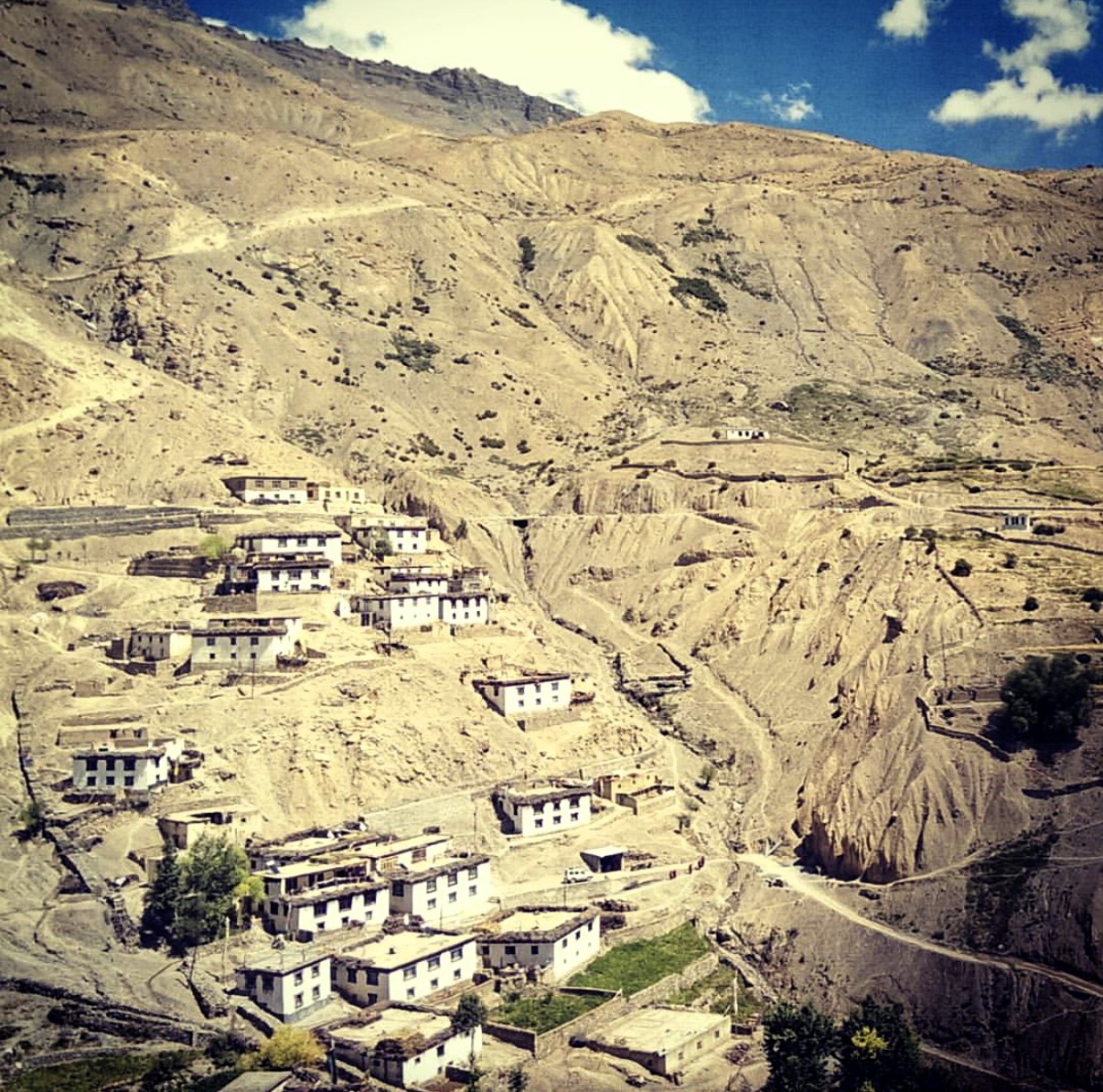
Over the next four days, Kaza became our base, and Langza was the first ride out, a small village at 14,500 feet, a short but rough climb from town. At the entrance, a large golden Buddha statue watches over the valley below. There are prayer flags everywhere, the kind that have been there long enough to fade at the edges. The village is barely a handful of houses, and it was completely still.
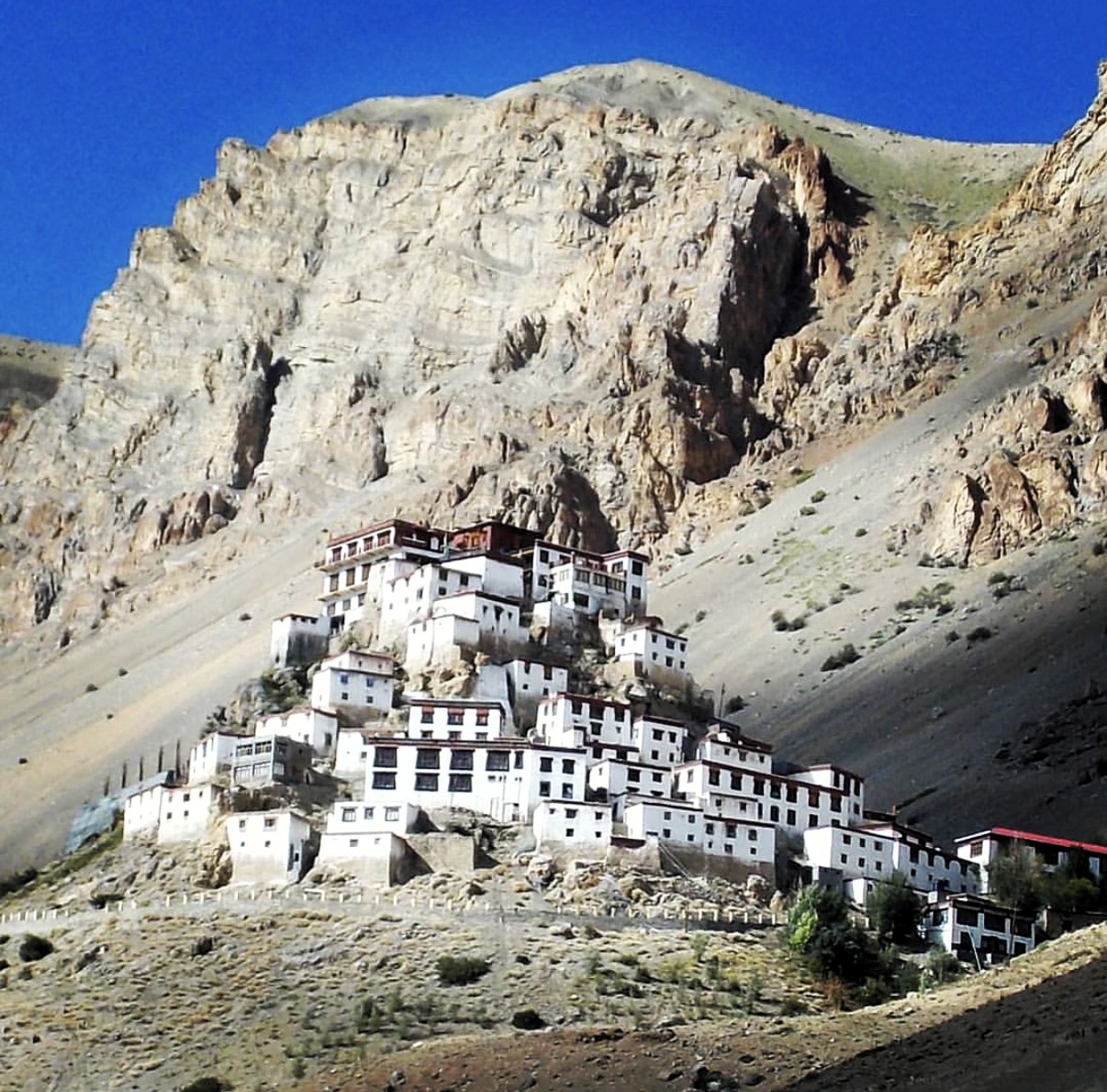
Key Monastery was my favourite. It sits on top of a hill, visible from a distance, and the road up to it winds in a way that keeps revealing more of it with every bend. You round a corner and it’s closer. Round another and you can make out the structure properly. By the time you reach the gates, you feel overwhelmed by the grandeur of it. I have a photograph of it framed on my wall at home. One day I will go back.
We rode to Kibber, once one of the highest motorable villages in the world, and to Dhankar Monastery, which hangs off a cliff face so dramatically it looks like it was built by someone who had strong opinions about the relationship between architecture and danger. Mud Village in Pin Valley was the last of it, a place so quiet and remote that the road ends there almost like a statement.
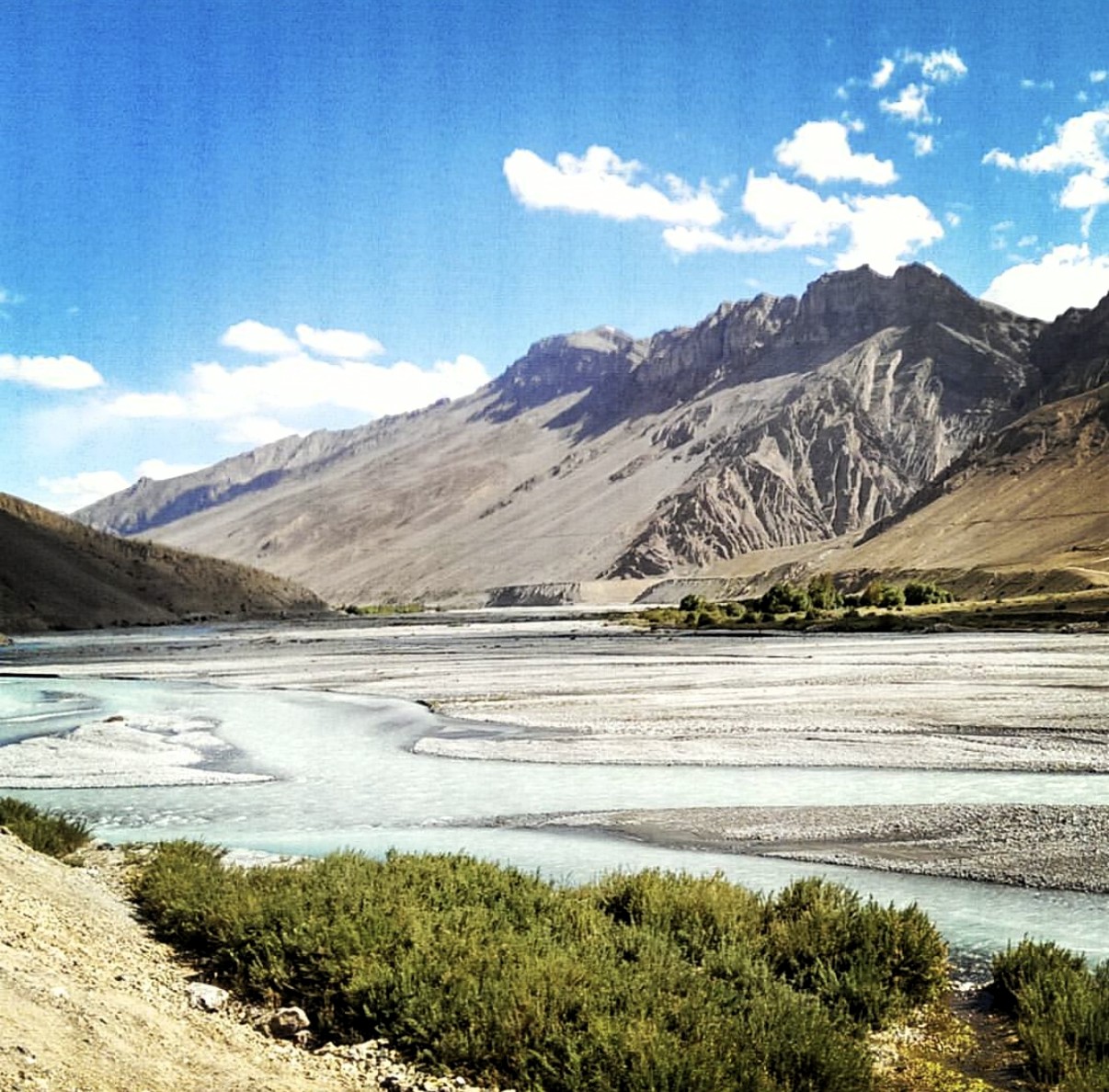
Running through all of it is the Spiti River, a glacial stream that cuts through the valley and gives the whole landscape its shape. You cross it, ride alongside it, and hear it constantly. In a place as dry and silent as Spiti, a river feels like something that shouldn’t exist there, and yet it’s the reason everything else does. Come winter, it freezes over completely. That version of Spiti is still on my list, the frozen river, the white mountains, and if luck is on my side, a snow leopard sitting on a ridge somewhere above, watching everything below with the kind of patience I’ll never have.
Every day out of Kaza felt like that. A rough road, a destination that made the road worth it, and the ride back in fading light.
After four days we had seen everything we had set out to see. Leaving wasn’t easy. Part of me wanted another day, another ride out, another evening at Sakya Abode with the people we had shared tables and conversations with. But we both knew that if we stayed we’d keep finding reasons to stay, and Chandratal was waiting. We kicked the Bullet alive.
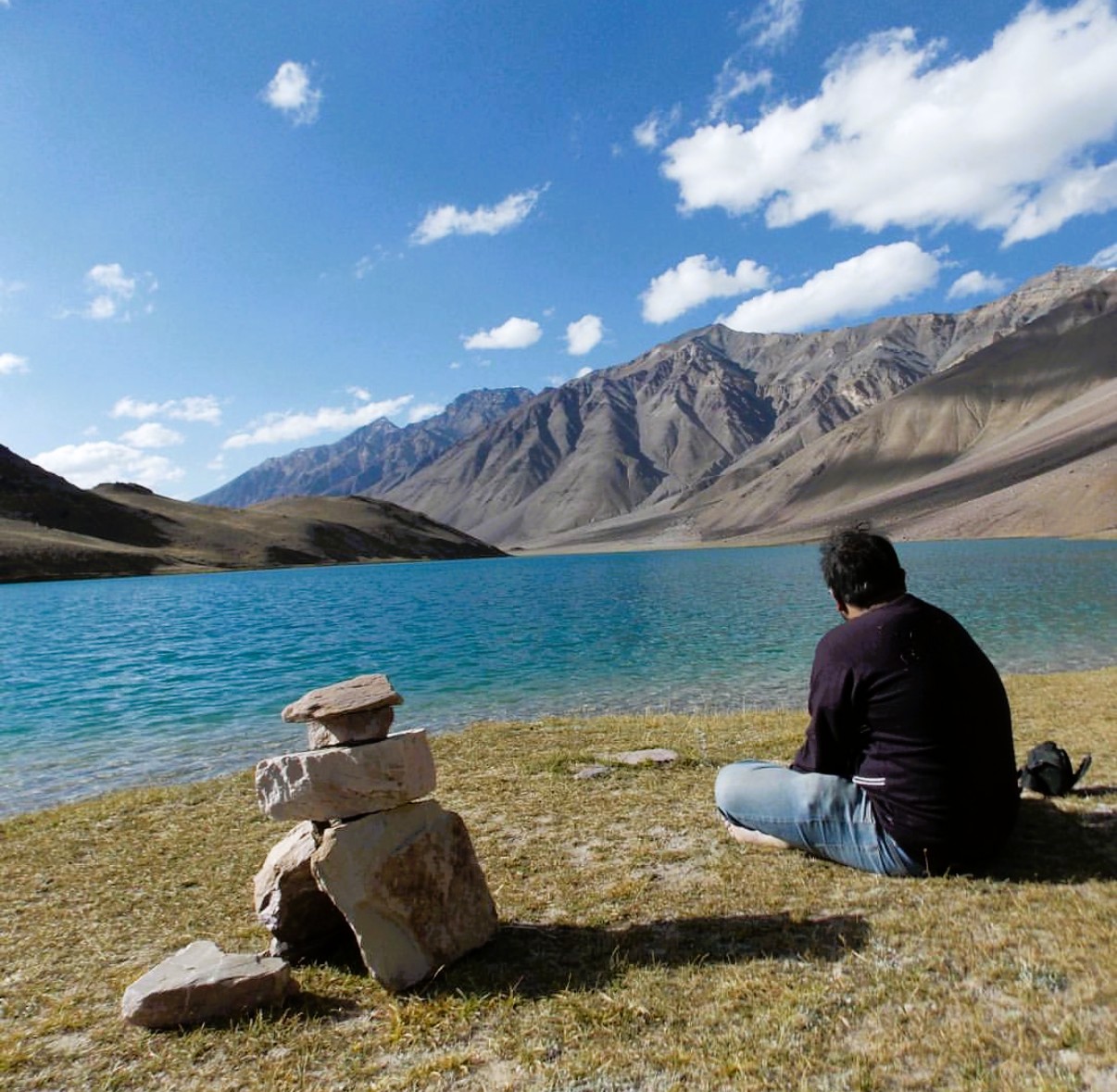
I had first heard of Chandratal in Lootera. Ranveer Singh’s character talks about wanting to see it before he dies. A lake far beyond Manali, somewhere in the high Himalayas. Blue-green water. Silence so complete you could hear your own heartbeat. I’d wanted to see it ever since I watched the film. I didn’t know then that a few years later I’d be riding toward it on a rented Bullet with a friend who was equally mad.
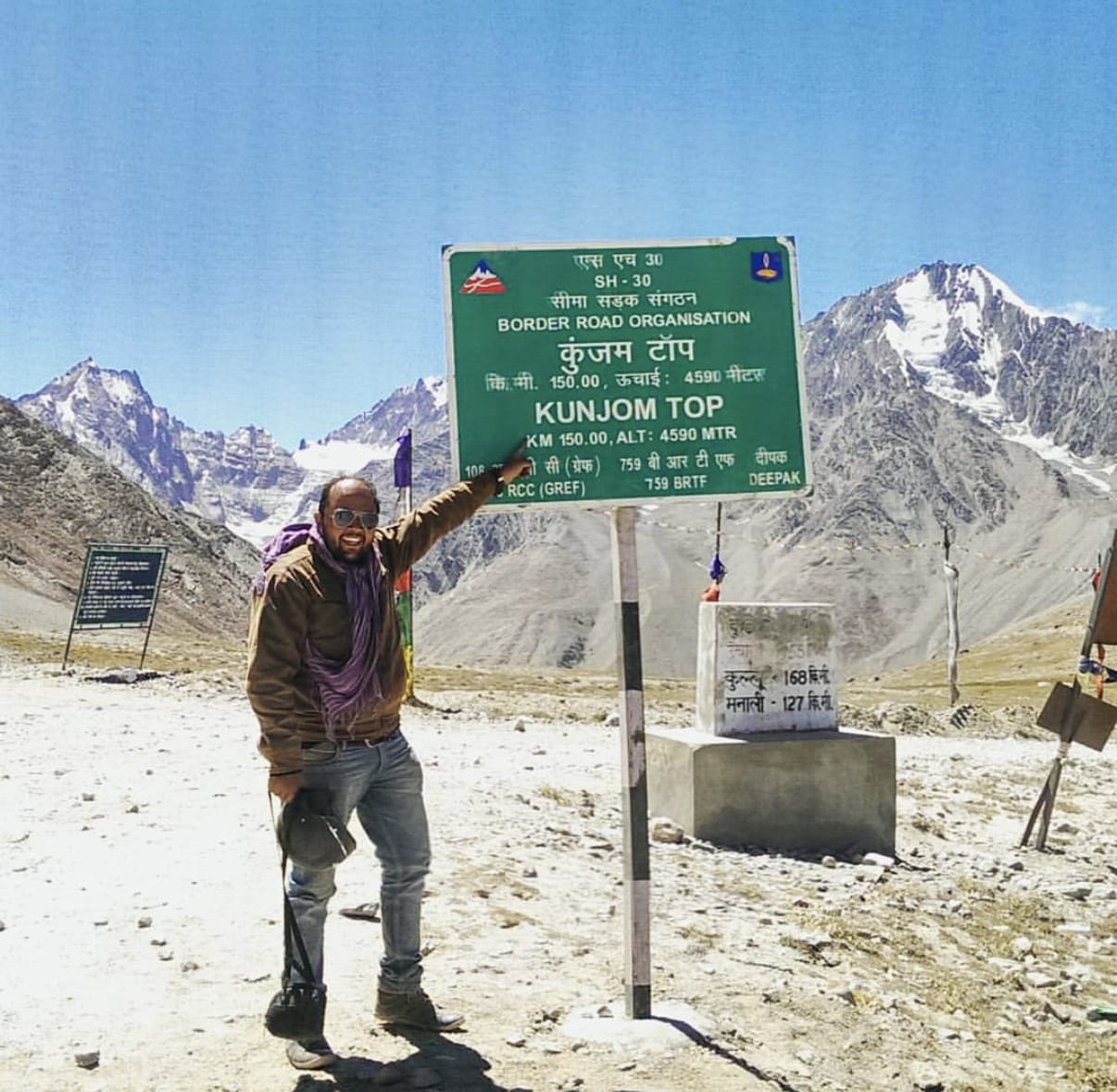
The road from Kaza to Chandratal meant riding up through Losar, climbing to Kunzum Pass at 15,060 feet, then descending through hairpin bends to Batal. A few kilometres before Batal, a narrow 14-kilometre diversion branches off toward the lake, running alongside the Chandra River. Everyone we spoke to warned us about that last stretch. The road was narrow, rough, and left very little room for error.
By then we had learned one thing about Spiti: the worse they say the road is, the better the destination tends to be.
We rode on.