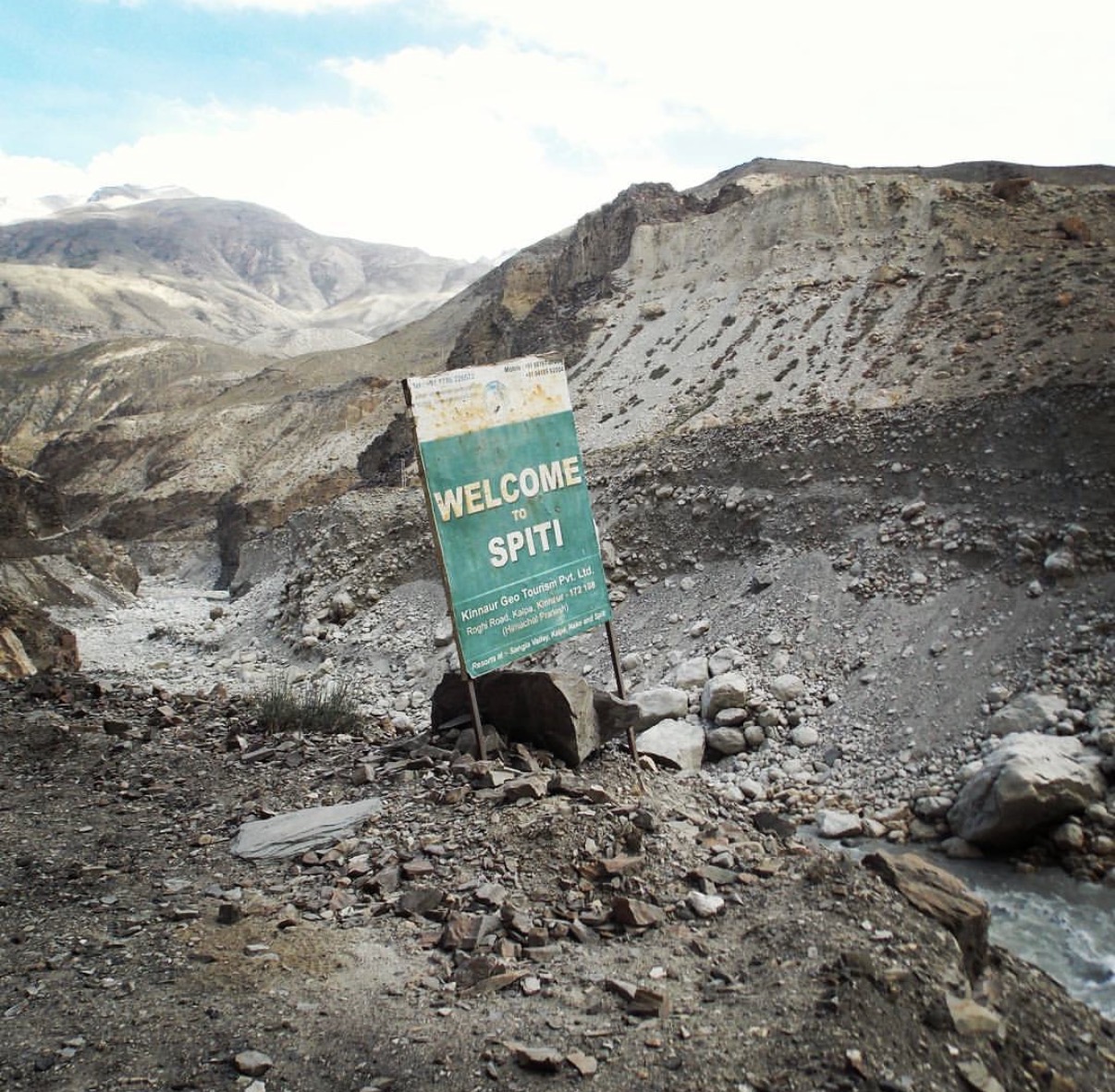
The left turn toward Chandratal, just after Kunzum Pass, was the worst road we had encountered on the entire trip. And by that point we knew what bad roads looked like.
This one had everything. Broken patches, loose gravel, water crossings, shooting stones, and drops on one side that left no room for error. The distance from Kaza to Chandratal is around 100 kilometres, but the terrain made every one of them feel earned. If the Tabo to Kaza night ride had been an adventure, this was something closer to a test. Two wandering souls far from home, a rented Bullet, a spare can of petrol strapped to the rack, and nothing in between for as far as we could see. No dhabas, no mechanics, no network. If something went wrong out there, we’d be figuring it out on our own.
Looking back now, I would never attempt that ride without proper planning and preparation. But young men do stupid things and live to tell the story. That’s exactly what this is.
The rough terrain kept us at 30 to 40 kilometres an hour, which turned out to be the right speed. It forced us to actually look at what was around us. Barren landscapes, distant glaciers, rivers cutting through rock, mountains so vast they made the idea of being in a hurry seem absurd. The excitement of getting to the lake kept us going. After nine days on the road, that was enough.
We reached the campsite around 2 in the afternoon with the cold already setting in. As had been our approach since Shimla, we hadn’t booked anything in advance. We scanned the options from the road and picked the camp with the most tents and the largest central tent. The manager gave us a fair deal on a twin-sharing tent with wooden cots.
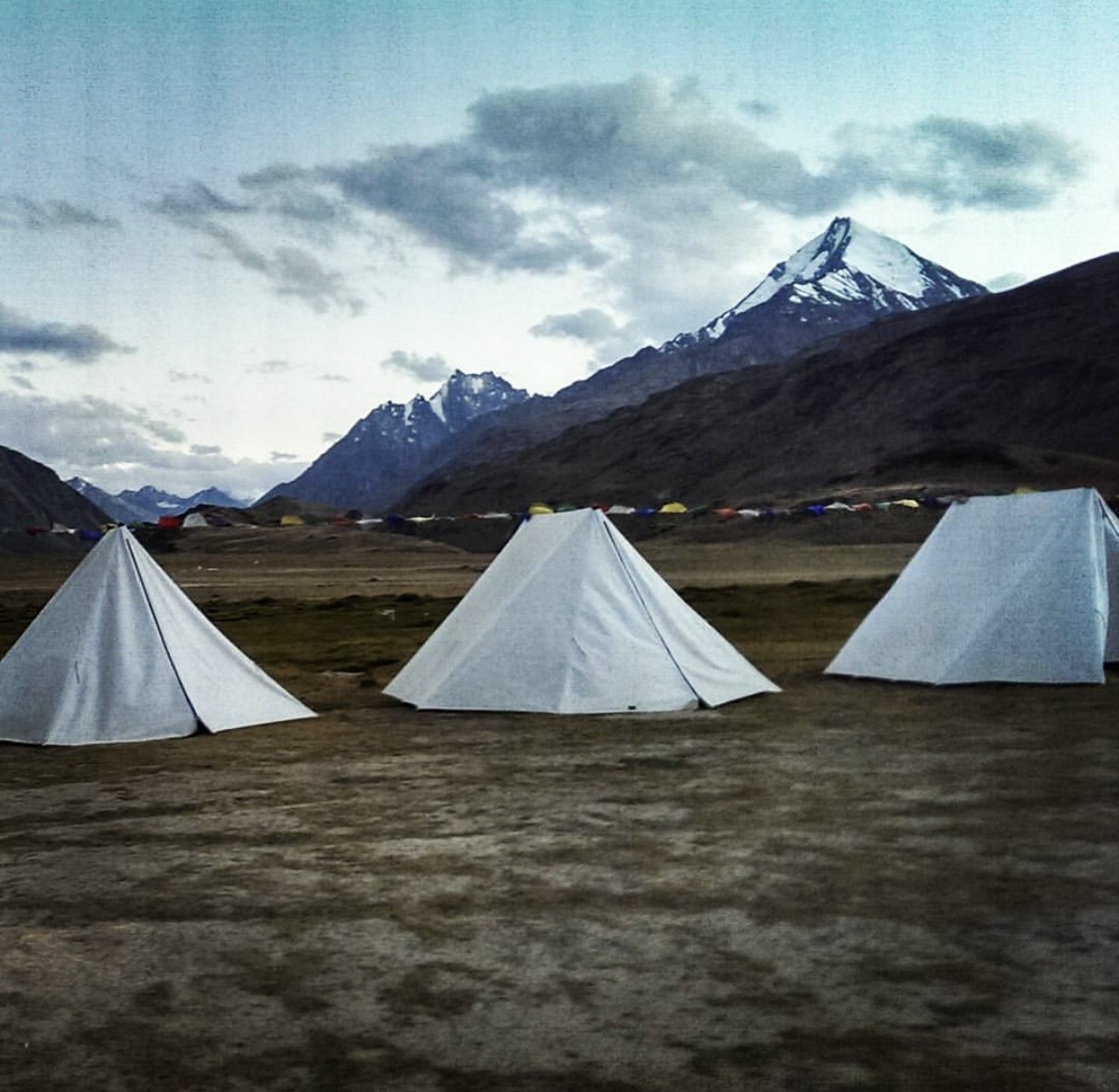
My friend wanted to save money and suggested sleeping bags instead. I told him I wasn’t dying out here to save a thousand rupees. By the middle of that night, he agreed with me completely. It was brutally cold.
We had a quick bowl of piping hot Maggi and rode the ten minutes to Chandratal Lake. From the parking point there’s a short walk to the lake, around twenty minutes. Those twenty minutes were the most physically difficult of the entire trip. The altitude, the cold, and my poor stamina all arrived at once. I basically crawled the last stretch. Giving up never crossed my mind. Not after nine days. Not when we were this close. My friend, being the athlete he is, had no such problem and was waiting for me at the top with an irritating amount of energy to spare.
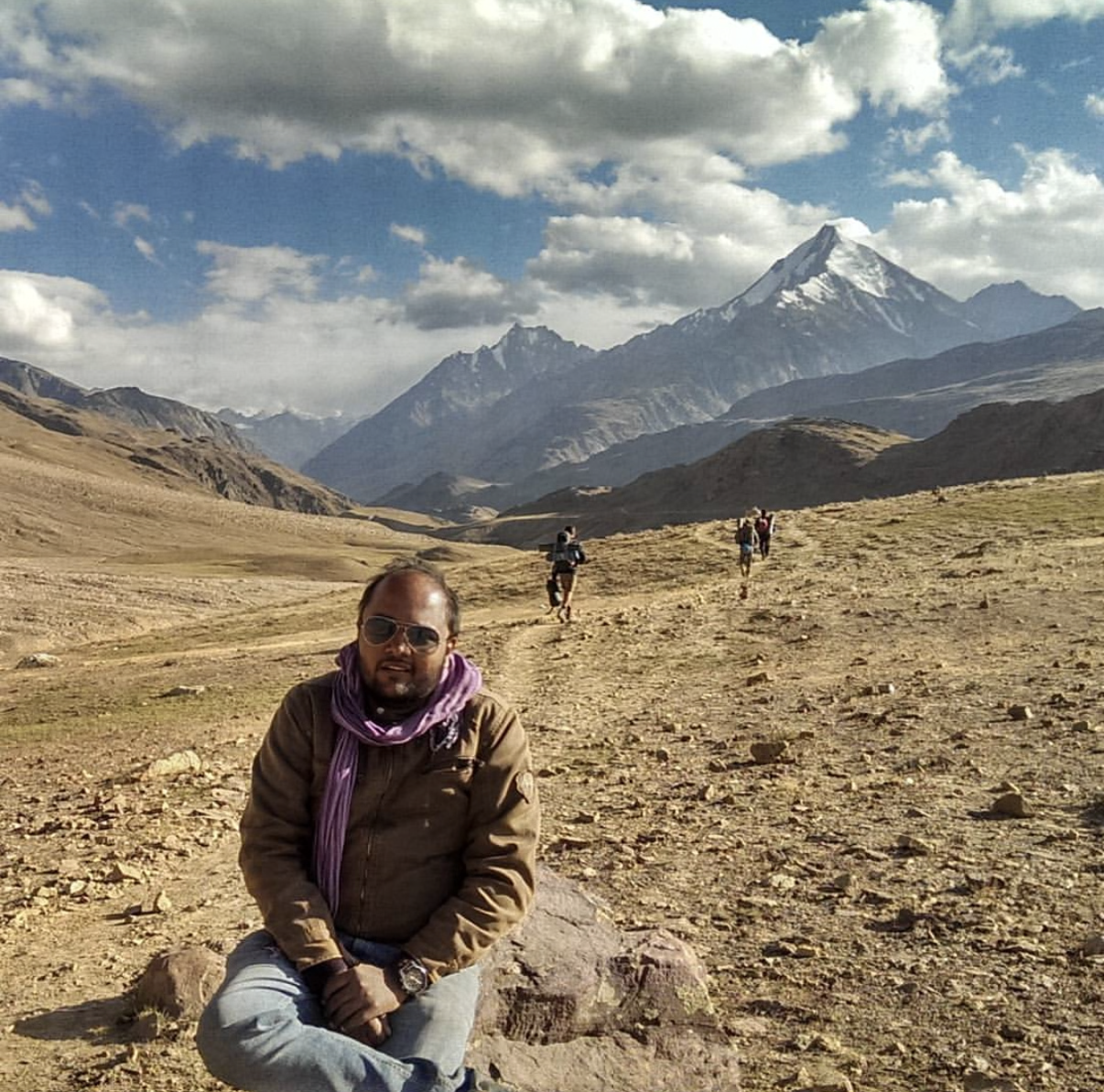
When I saw the lake, the ache in my body left as quickly as it had arrived.
Blue-green water lying still in the middle of mountains, patient and ancient. The shadows shifted across the surface as the light changed, moving the colour from one shade to another. A sharp, clean wind came in from the far side. I took my shoes off, put my feet in the water, and sat down. What I felt wasn’t joy exactly, or excitement. It was the specific feeling of having earned something. Nine days ago we were sitting in Bhilai wondering whether to call the whole thing off. Now we were here.
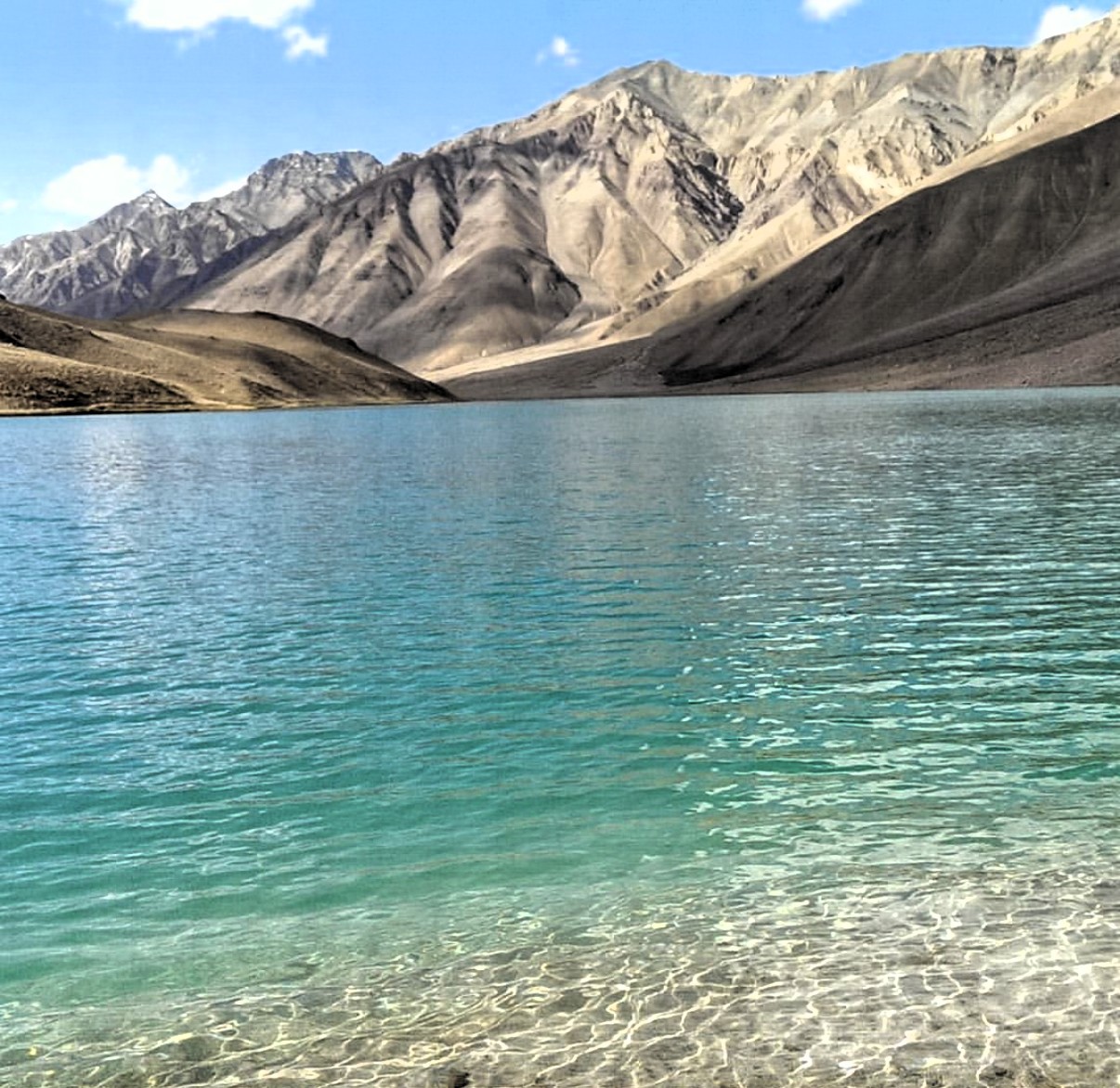
The silence at Chandratal is something I have not found anywhere since. Not in temples, not in the mountains before or after. I am still searching for it.
We sat there for over an hour without saying much. At some point I wanted to call my brother and show him what was in front of me, but there was no network. My brother and I used to say, “Achievement wali jagah pe aksar insaan akela hi hota hai.” The places you chase the hardest, you usually end up reaching alone, with nobody around to celebrate. I understood that line completely sitting by that lake.
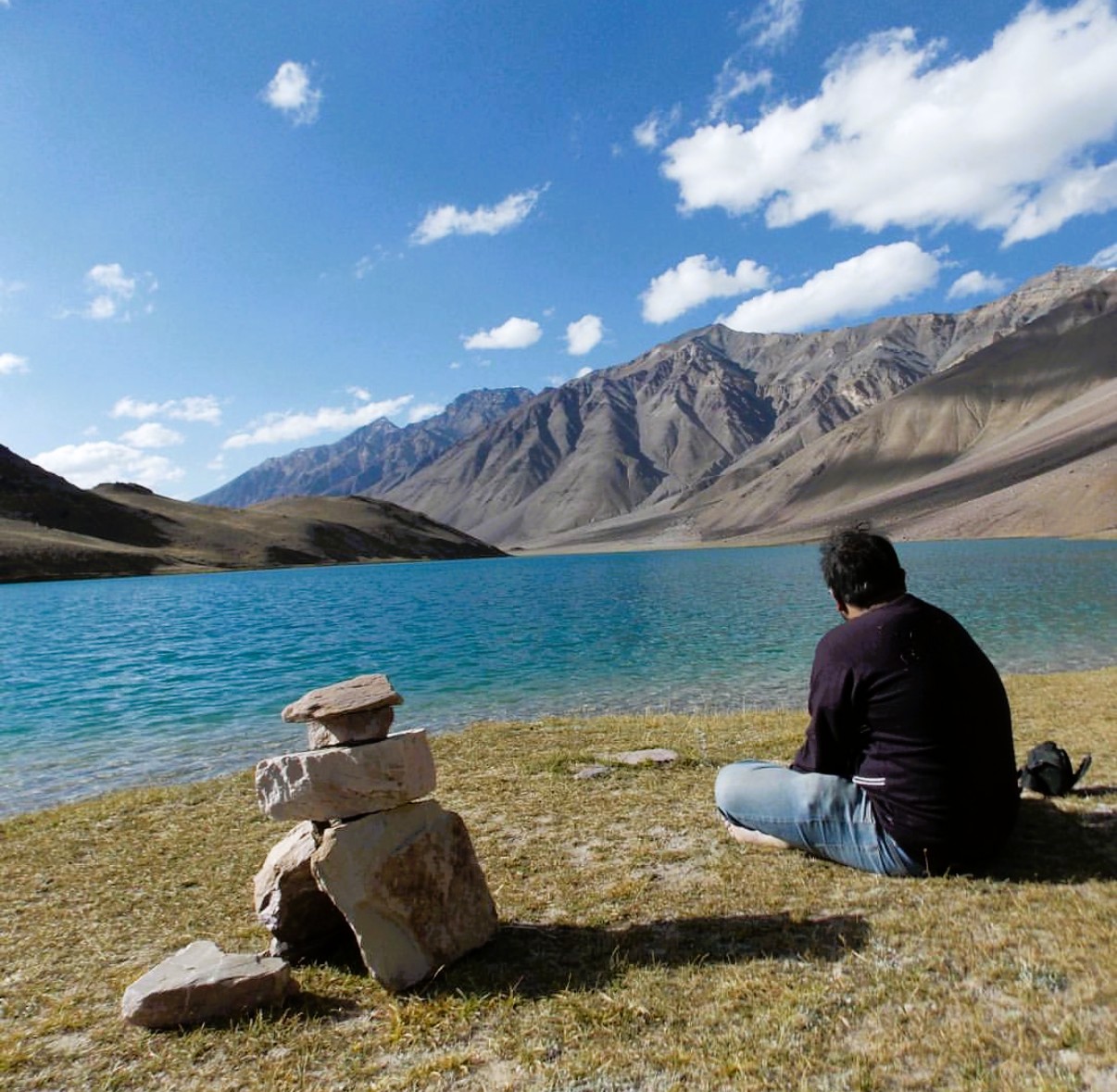
I didn’t want to leave. But the sun was setting fast and the cold was getting serious. We walked back slowly, got on the Bullet, and rode back to camp.
Hot tea was waiting. We went to the tent and crashed into the cots and were asleep within minutes.
A couple of hours later I woke up to the sound of singing. It was coming from outside. We unzipped the tent and saw the main tent lit up warmly in the darkness. It was nearly seven, so we stepped out for dinner.
The cold outside hit like a wall. We ran to the main tent.
Inside was warm, bright, and loud. A large boiler burned in the centre. Around it sat a group of men in a circle, singing in Bengali, a language I recognised because most of my colleagues back home were from West Bengal. In the middle of the circle sat an open bottle of Old Monk and some packets of wafers. We quietly pulled up chairs and joined them. Our own whisky bottle had barely enough left for one peg each. When we’d started from Shimla we had made a rule, one small drink per night, no more, because we had to ride every day. By the time we reached Chandratal, that rule felt like it had been made by someone who had never been this cold.
The camp manager told us these were trekkers who had just completed an expedition, spending the last few nights at a nearby glacier. All of them were above fifty. They told us they had been travelling together since college, every year, without fail. I won’t pretend I wasn’t envious. To grow old and still have your people, still be out in the mountains, that’s something.
Dinner was baingan bharta, roti, and dal. Simple, hot, and one of the best meals I have ever eaten. Maybe I was starving. Maybe food just tastes better at 14,100 feet.
One of the trekkers noticed our empty bottle and poured us some Old Monk. That warmth, from the rum and from the company, is something I still remember clearly.
At around nine we stepped outside to walk back to our tent. The sky stopped us.
Stars covering every inch of the sky, packed so tightly it looked like something out of a painting rather than something real. I had seen clear skies in Kaza too, but this was different. It was too cold to stand there long. We took one last look, ran back to the tent, pulled the woollen blankets over ourselves, and fell asleep somewhere between exhaustion and something that felt a great deal like contentment.